
The Ultimate Guide to Local SEO for Doctors: Winning Your Neighborhood Search
Ready to grow your business?
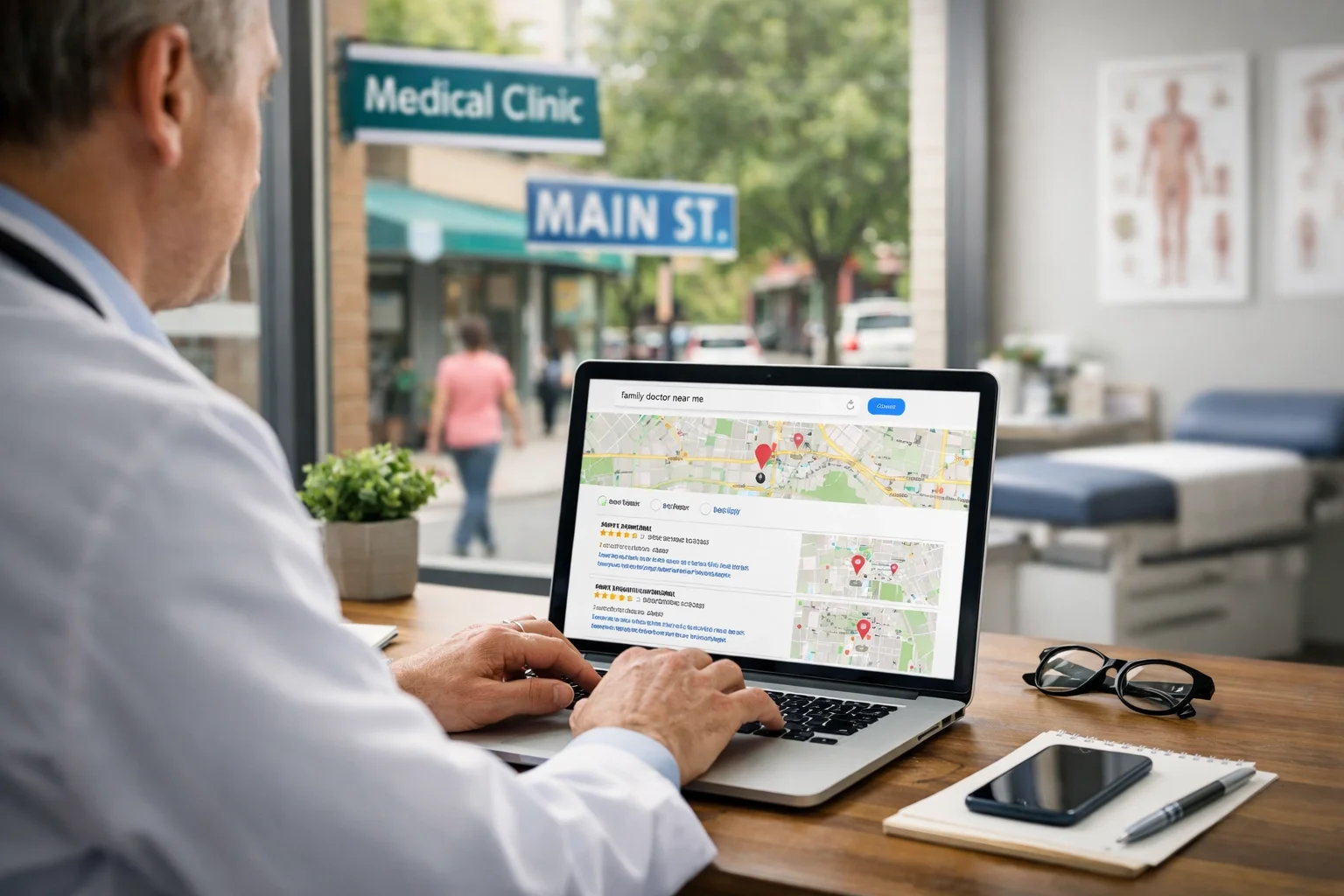
In 2026, the way patients find doctors has fundamentally shifted. While AI-driven search snapshots and voice-activated assistants have changed the interface, one truth remains constant: healthcare is local. When a parent searches for a "pediatrician near me" at 2:00 AM, or a professional looks for a "physical therapist in Downtown," they aren't looking for a global authority, they are looking for a trusted expert within a five-mile radius.
The short answer to whether you can ignore local SEO in favor of general brand building? No. If your practice doesn't appear in the "Local Pack", that map section at the top of Google, you are effectively invisible to the highest-intent patients in your neighborhood.
At Rex Marketing and CX, we’ve seen that the doctors who dominate their local markets aren't necessarily the ones with the largest budgets; they are the ones who best align their digital presence with the specific signals Google uses to determine local relevance and trust.
Why Local SEO is Different for Healthcare
General SEO focuses on ranking for broad terms. Local SEO for doctors is a specialized discipline that combines traditional search signals with geographic relevance and the rigorous standards of "Your Money or Your Life" (YMYL) content. Google understands that medical advice and services carry high stakes, so it applies a stricter filter to healthcare providers.
In 2026, this filter is heavily influenced by E-E-A-T: Experience, Expertise, Authoritativeness, and Trustworthiness. For a local doctor, this means your digital footprint must prove not just that you are a physician, but that you are the physician for your specific community.
The Anchor of Your Strategy: Google Business Profile (GBP)
Your Google Business Profile is arguably more important than your website for immediate patient acquisition. It is your digital front door. If your GBP is neglected, your local rankings will suffer, regardless of how much you spend on content.
Optimization Essentials for 2026
To win the neighborhood search, your profile must be more than "complete", it must be active and authoritative.
Claim and Verify Every Location: If you have multiple clinics, each needs its own verified profile. Ensure your Name, Address, and Phone number (NAP) are identical across all listings.
Primary Category Accuracy: Choose your primary category with surgical precision. If you are a "Dermatologist," don't just list "Doctor." This is the strongest signal you can give Google about what you do.
High-Resolution, Real Imagery: Stock photos are a conversion killer. In 2026, Google’s AI can easily distinguish between a generic office photo and your actual clinic. Upload high-quality photos of your waiting room, treatment areas, and your team.
Google Posts: Use the "Update" feature at least once a week. Share health tips, announce new equipment, or introduce a new staff member. This activity signals to Google that your practice is operational and engaged.
For more details on setting up your profile, refer to the official Google Business Profile Help Center.
The Role of E-E-A-T in Local Search
Google’s search algorithms have become incredibly sophisticated at detecting genuine expertise. For doctors, this means your content strategy must reflect your clinical reality.
Does medical SEO strategy still matter when AI can answer patient questions? Absolutely. AI provides information, but it doesn't provide care. Local SEO bridges the gap between a patient's question and your exam table. You can read more about why Medical SEO strategy still matters in 2026.
Building Trust Through Content
To establish E-E-A-T, your website should feature:
Detailed Provider Bios: Include education, board certifications, years of experience, and local community involvement.
Service-Specific Pages: Instead of one "Services" page, create dedicated pages for each condition you treat. This allows you to use SEO rich text to explain complex procedures in an accessible way.
Patient Education: A robust healthcare content strategy that answers common patient FAQs directly addresses the "Expertise" and "Trust" pillars of E-E-A-T.
Local Keyword Strategy: Thinking Beyond the City Name
Many practices make the mistake of only targeting "Doctor in [City]." In 2026, search intent is much more granular. Patients search by neighborhood, landmark, and even zip code.
Neighborhood-Level Targeting
If your practice is in the "West End" or "Lincoln Park," those specific terms should appear in your meta titles and headers. This is a core component of SEO localization.
Consider these keyword structures:
"[Specialty] near [Local Landmark]"
"Best [Service] in [Neighborhood Name]"
"Affordable [Treatment] [Zip Code]"
By targeting these long-tail, hyper-local keywords, you face less competition and reach patients who are physically closer to your office, increasing the likelihood of an appointment booking.
Reputation Management: The Review Engine
In local SEO, reviews are a weighted ranking factor. Google looks at the quantity, frequency, and, most importantly, the sentiment of your reviews.
The short answer to whether you should respond to reviews? Yes, always. Even the negative ones.
A Strategic Approach to Reviews
Consistency is Key: A steady stream of 5 new reviews a month is better than 50 reviews in one day followed by months of silence.
Keywords in Reviews: While you can’t coach patients on what to write, you can ask them to mention the specific service they received. When a patient writes, "Best knee replacement surgeon in Austin," it reinforces your local relevance for those specific terms.
HIPAA Compliance: Never confirm a patient was seen at your office or disclose any medical information in a review response. A professional "Thank you for your feedback, please contact our office manager so we can discuss this further" is the gold standard for negative reviews.
For deeper insights into managing your digital reputation, industry leaders like Search Engine Journal offer extensive resources on the impact of reviews on local algorithms.
Technical Local SEO: The Foundation
You can have the best content in the world, but if Google’s crawlers can't understand the structure of your data, you won't rank.
Schema Markup
Schema is a piece of code that tells search engines exactly what they are looking at. For doctors, you should implement:
Physician Schema: Highlights your specific credentials and specialties.
LocalBusiness Schema: Clearly defines your address, phone number, and hours of operation.
Review Schema: Helps those gold stars appear in the search results, increasing your click-through rate.
If you haven't looked at your site's backend recently, it may be time for a professional review. Understanding why an SEO audit is important is the first step in identifying technical gaps that are holding your practice back.
Content Distribution and Local Citations
Local SEO doesn't just happen on your website. Google looks at the "broader web" to see if other reputable sources verify your existence.
Local Citations
A citation is any mention of your NAP (Name, Address, Phone) on the internet. This includes:
Healthcare-specific directories like Healthgrades or Vitals.
The local Chamber of Commerce.
Local news outlets or blogs.
The key here is accuracy. If your old office address is still listed on an obscure directory, it creates "NAP inconsistency," which confuses Google and lowers your trust score. A clean, consistent content distribution strategy ensures that your practice’s information is uniform across the entire digital ecosystem.
What to Track: Measuring Local Success
Success in local SEO isn't just about "ranking #1." It's about business outcomes. At Rex Marketing and CX, we recommend tracking:
Google Map Views: How many people saw your practice on the map?
Direction Requests: A high-intent signal that someone is actually planning to visit your clinic.
Click-to-Call Volume: How many patients called you directly from their search results?
Local Pack Position: Your visibility for your most important "service + location" keywords.
Next Steps for Practice Owners
Local SEO is an ongoing practice, not a one-time setup. As search behavior evolves with the introduction of more AI-driven tools, staying relevant requires a commitment to quality data and authentic patient engagement.
The goal is simple: when someone in your neighborhood needs help, your practice should be the obvious choice. By focusing on your Google Business Profile, local keyword intent, and the pillars of E-E-A-T, you build a resilient marketing engine that drives patient growth year after year.
Ready to dominate your local search? Book a Free Marketing Consultation with Rex Marketing and CX.
