
The Rex Blog
Read on to learn more about all things SEO, marketing, and growth for your healthcare business.

Local SEO Secrets Revealed: Ranking Your Medical Practice in 2026
Is local SEO still the primary driver for new patient acquisitions in 2026? The short answer? Yes. But it looks nothing like it did three years ago. In the current landscape, search engines have moved beyond simple keyword matching. They are now sophisticated engines of intent and proximity. For a medical practice, this means that appearing at the top of a search result isn’t just about having the right words on your page; it’s about proving your physical relevance and professional authority within a very specific geographic radius.

Why AI Overviews Will Change the Way You Approach Medical SEO
The landscape of digital search has undergone a fundamental shift. For years, medical SEO was a game of keywords, backlink counts, and technical site audits designed to place a practice at the top of a blue-linked list. Today, the introduction and expansion of AI Overviews: Google’s generative AI responses that sit at the top of the search engine results page (SERP): have changed the rules of engagement. For healthcare providers and medical practice owners, the question is no longer just how to rank first, but how to be the source that the AI cites when it answers a patient’s most pressing health concerns.

SEO for Therapists: How to Rank for the Clients You Actually Want to See
Does a high volume of website traffic guarantee a flourishing therapy practice? The short answer? No. For mental health professionals, the goal of search engine optimization (SEO) is not merely to get "eyes on the page." It is to get the right eyes on the page. In a field as deeply personal as counseling, the connection between a therapist's specialty and a client's specific need is the most critical factor in conversion.

The Ultimate Mental Health Marketing Guide for 2026
The landscape of mental health marketing has shifted significantly over the last few years. If you are still running the same playbook from 2023, you are likely noticing a drop in engagement and a rise in patient acquisition costs. In 2026, the "spray and pray" method of digital advertising is officially dead. Patients are more skeptical, privacy regulations are tighter, and search engines have become far more discerning about who they promote.
Why Your Google Business Profile Isn’t Bringing in New Patients
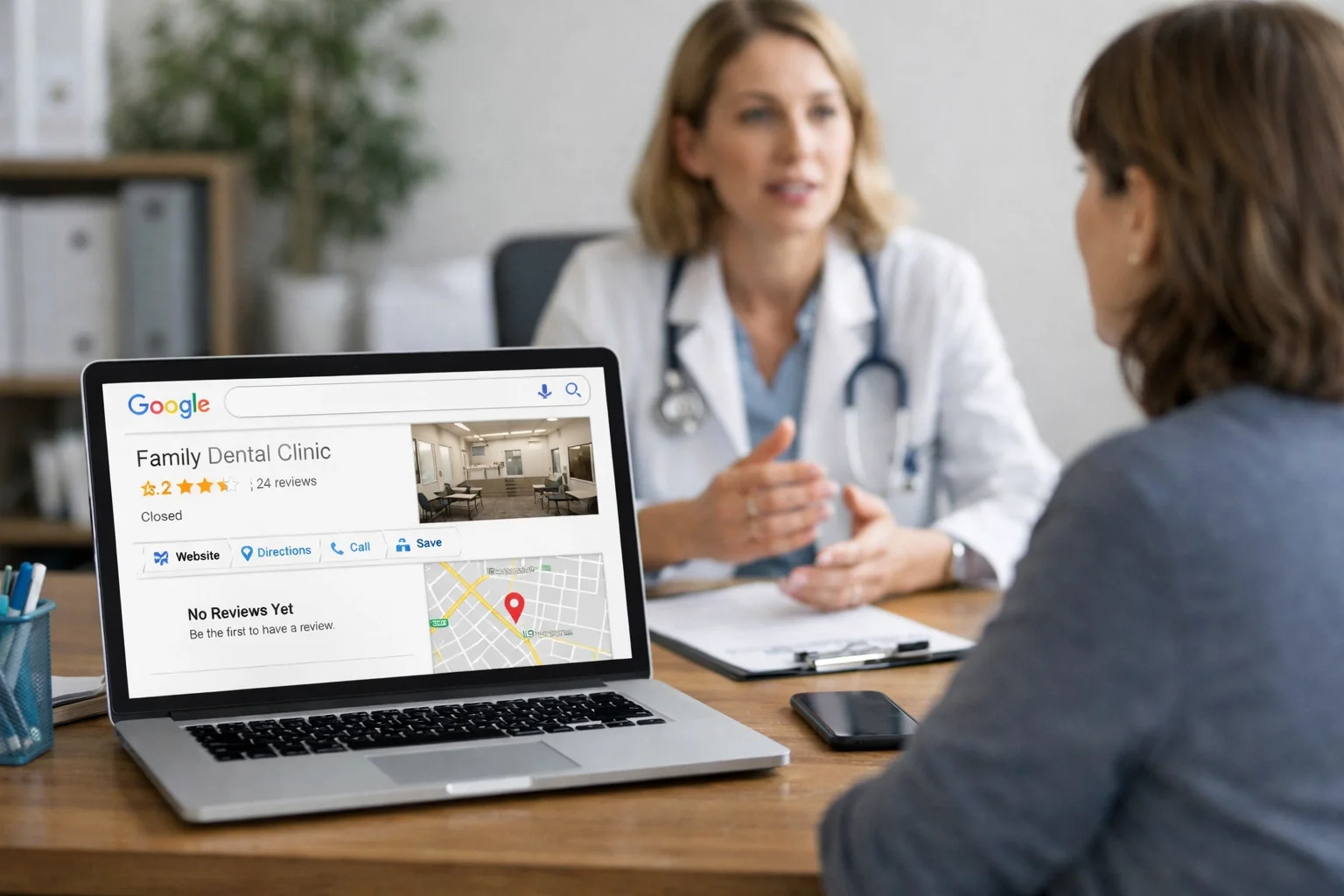
In the current healthcare landscape, your Google Business Profile (GBP) is often the first, and sometimes the only, interaction a potential patient has with your clinic before deciding to book an appointment. It functions as a digital front door. However, many practitioners find themselves frustrated when, despite having an active profile, the phone isn't ringing and the "Book Online" clicks remain stagnant. The short answer for why this happens? Most profiles are treated as static digital yellow page listings rather than dynamic conversion assets.

How to Get More Therapy Clients Without Increasing Your Ad Budget
The rising cost of digital advertising in the mental health space has left many private practice owners and clinic directors in a difficult position. As more venture-backed teletherapy platforms enter the market with massive budgets, the cost-per-click for keywords like "therapist near me" or "anxiety counseling" continues to climb. The short answer to whether you can grow without a massive ad spend? Yes, you can. While paid ads offer a quick injection of traffic, they are a variable expense that disappears the moment you stop paying. Building an organic growth engine, however, creates an appreciating asset that brings in high-quality clients for years to come.

How Can Email Marketing Help Your Inbound Marketing Strategy?
Email marketing helps inbound marketing by giving you a way to stay connected with people after they first find your brand. Inbound marketing is built around attraction. Instead of pushing your message in front of people who may not care, inbound marketing focuses on drawing in the right audience through useful content, search visibility, guides, videos, resources, and helpful pages. It works because it meets people where they already are. They have a question, a problem, or a need, and your brand shows up with something useful.

What Is Compound SEO? A Definitive Guide
If you have been trying to learn SEO, you have probably come across a lot of terms that sound more complicated than they need to be. Compound SEO is one of those phrases. It can sound technical or even a little vague at first, but the core idea is actually very simple. Compound SEO is what happens when your SEO work starts building on itself. Instead of thinking about SEO as one page trying to rank for one keyword, compound SEO looks at the bigger picture.

Healthcare Content Strategy: How to Build Authority and Maintain Compliance
Can you build authority in healthcare without getting stuck in compliance? The direct answer: yes, if compliance is built into the strategy, not bolted on at the end. Healthcare founders have a specific problem most industries don’t: your content isn’t just competing for attention. It’s competing for trust, and it lives under real privacy rules, real enforcement, and real reputational risk. At Rex Marketing and CX, we treat compliance the same way we treat conversion rate optimization: it’s not a blocker. It’s part of the system.

10 Reasons Your Website Design Isn't Booking Patients
You are driving traffic to your medical practice website through SEO, local ads, or word-of-mouth, yet the phone isn't ringing and the "Book Appointment" button remains untouched. Why is there a disconnect? The short answer? Your website is likely suffering from friction, small, often invisible barriers that make it harder for a patient to trust you than to click "back" and find a competitor.

SEO for Therapists: How to Rank Your Practice on Google
Does search engine optimization actually work for mental health professionals? The short answer? Yes. In fact, for many private practices, SEO is the single most effective way to build a sustainable pipeline of new clients without relying on expensive per-click advertising or the unpredictable nature of social media algorithms.

Optimizing Your Google Business Profiles for Multi-Location Clinics
Why does your Google Business Profile matter for multi-location clinic SEO ? The direct answer? Because your Google Business Profile (GBP) is often the first “landing page” a patient sees, before your website, before your ads, and sometimes before they even know your brand name. For multi-location clinics, GBP gets even more strategic.

Why Your Therapist Website Deserves More Than Just a Contact Form
When someone lands on a therapist’s website, they are rarely "just browsing." Unlike someone shopping for a new pair of running shoes or looking up a menu for a Saturday night dinner, a person seeking mental health support is often in a state of vulnerability, urgency, or deep reflection. They are looking for a lifeline. So, does a simple "Contact Me" form suffice as the primary bridge between their pain and your solution? The short answer is no.

Smarketing: How Startups Can Unite Marketing and Sales
Healthcare marketing professionals supporting startup founders often do everything “right” and still watch pipelines stall because marketing and sales friction keeps pulling the company in two directions. In early-stage company challenges, speed matters, yet lead handoff problems turn genuine interest into silence when context gets lost or follow-up feels disconnected.

How Long Does It Take to Learn SEO and When to Hire Someone
You can start learning SEO in a few weeks, but most business owners need several months to understand it well enough to make strong decisions, and much longer to become truly effective at it. In practical terms, 1 to 3 months is often enough to grasp the fundamentals, while 6 to 12 months of hands-on work is usually needed before someone can confidently improve performance without a lot of guesswork. The right time to hire someone is when SEO starts affecting revenue, when your team cannot give it consistent attention, or when the cost of mistakes becomes too high.

How to Add Google Analytics to Webflow: A Guide
Adding Google Analytics to Webflow is straightforward once you know which method to use. In most cases, the simplest and most accurate setup is to create a Google Analytics 4 property, copy its measurement ID, paste it into Webflow’s Google Analytics integration field, save, and republish your site. Webflow currently supports GA4 measurement IDs only, and Webflow recommends using either the built-in integration or a manual tag in custom code, but not both, to avoid duplicate tracking.

How to Get More Therapy Clients Using Social Proof (The HIPAA-Compliant Way)
In the world of modern marketing, social proof is the primary driver of consumer trust. Whether someone is buying a pair of running shoes or selecting a mental health professional, they look to the experiences of others to validate their choice. However, for therapists, coaches, and mental health practice owners, the standard "review and testimonial" playbook is fraught with danger. Between HIPAA regulations and the ethical guidelines set by boards like the APA or NASW, the traditional approach to gathering reviews is often restricted or outright prohibited.

How to Use Marblism’s AI Employees to Grow as a Healthcare Founder
Does the traditional hiring model still make sense for healthcare entrepreneurs building a clinic, private practice, or health tech product? The short answer? Not the way most founders are forced to do it today. In healthcare, growth usually means piling more work onto the same small team: more calls, more follow-ups, more content requests, more reviews to respond to, more referral outreach, more “can you also write this policy page” tasks.
The Ultimate Guide to Local SEO for Doctors: Winning Your Neighborhood Search
In 2026, the way patients find doctors has fundamentally shifted. While AI-driven search snapshots and voice-activated assistants have changed the interface, one truth remains constant: healthcare is local. When a parent searches for a "pediatrician near me" at 2:00 AM, or a professional looks for a "physical therapist in Downtown," they aren't looking for a global authority, they are looking for a trusted expert within a five-mile radius.

5 Essential Medical Practice SEO Tips to Outrank Your Competition
In the current healthcare landscape, the "digital front door" of your practice is often the first and only impression a potential patient has of your care. If your website is buried on page two of Google, you are essentially invisible to the 80% of patients who begin their healthcare journey with an online search. By March 2026, the complexity of search has only increased with the integration of generative AI and stricter technical requirements.